6.2 The different lots & stakeholders
6.3 Three billion tenders for the next TELT phase – CO12/T15
6.4 Summary of interview with TELT
6. The Lyon-Turin Railway Project
6.1 Project Presentation
The future Lyon-Turin line running 270 kilometres, 70% of which are in France and 30% in Italy, is the heart of the Mediterranean Corridor, one of the 9 axes of the TEN-T European transport network, linking Spain with Eastern Europe, crossing France, Italy, Slovenia and Croatia. The line is divided into three sections:
• the common cross-border section between Italy and France covers 65 km of TELT’s area of responsibility and includes, in addition to the Mont Cenis base tunnel, the sections connecting to national lines and the two international stations of Susa (Piedmont) in Saint-Jean-de-Maurienne (Savoy)
• the Italian part, from the Turin hub to Bussoleno (Susa Valley), roughly 50 km under the responsibility of Rete Ferroviaria Italiana (RFI)
• the French part, from Saint-Jean-de-Maurienne to Lyon, about 160 km under the responsibility of SNCF Réseau.
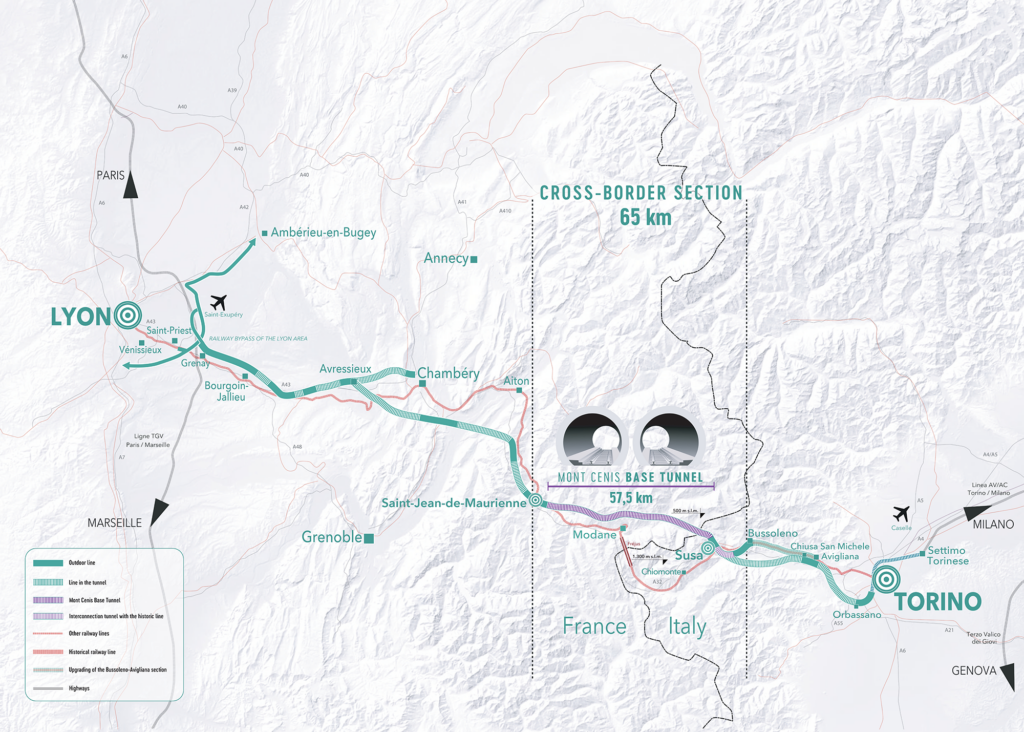
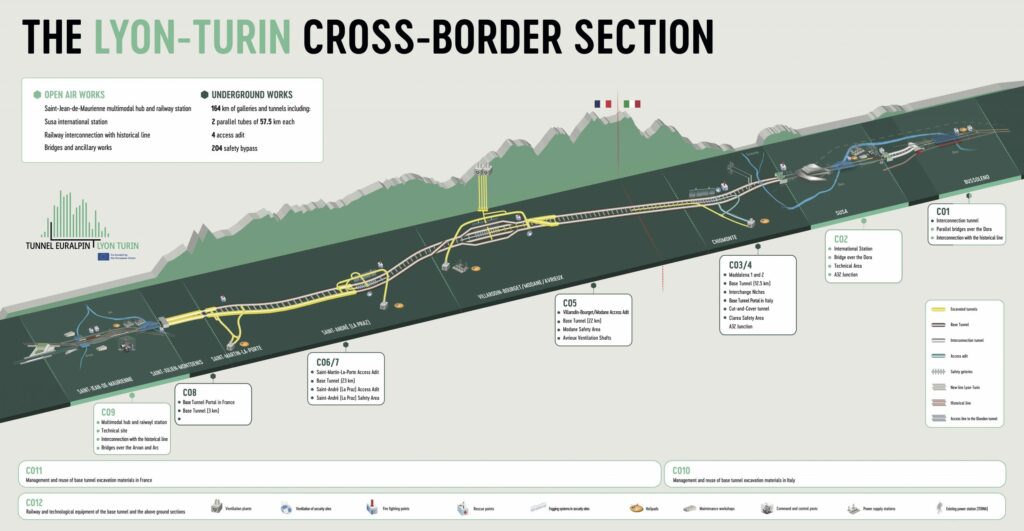
The cross‑border section of the Lyon–Turin project is currently under construction, with 3,300 workers deployed across 11 operational worksites, both at the surface and underground. To date, more than 48 km have been excavated (29%), including approximately 21 km of the base tunnel, out of a total of 164 km of planned galleries. The value of the contracts awarded so far amounts to more than €8 billion. The total project budget, as approved in 2015 by the French and Italian governments, stands at €11.1 billion (2012 prices). [47]
Considering a plausible average inflation rate between 2012 and 2033, the necessary cost of this megaproject may exceed €20 billion (author’s estimate).
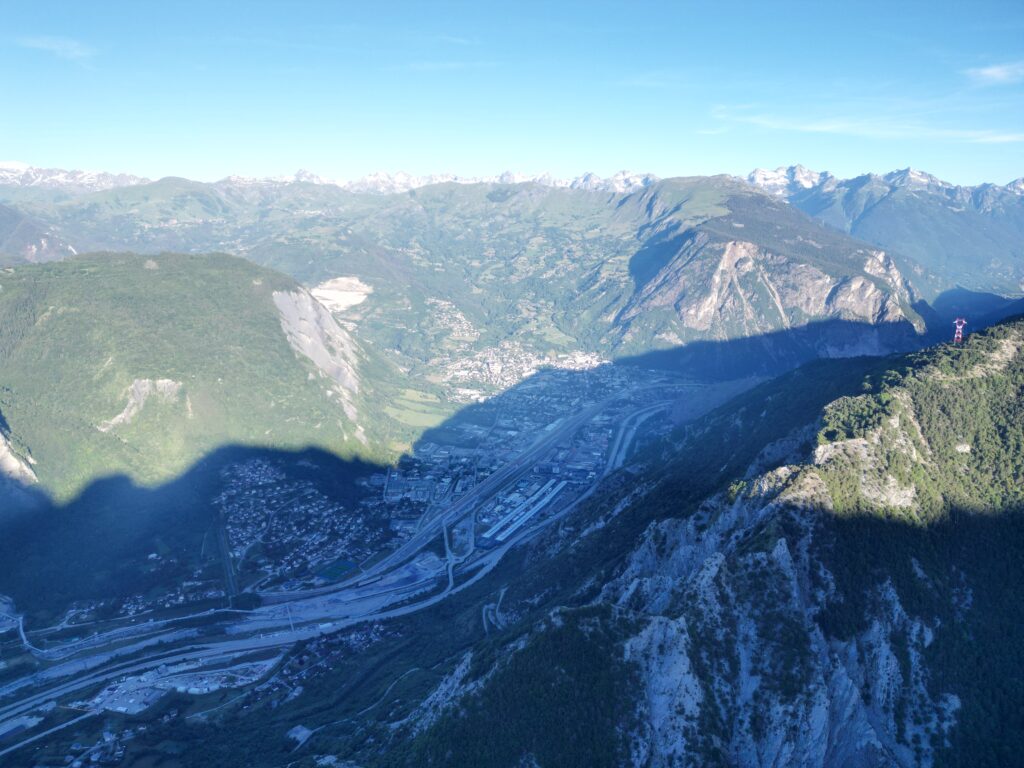
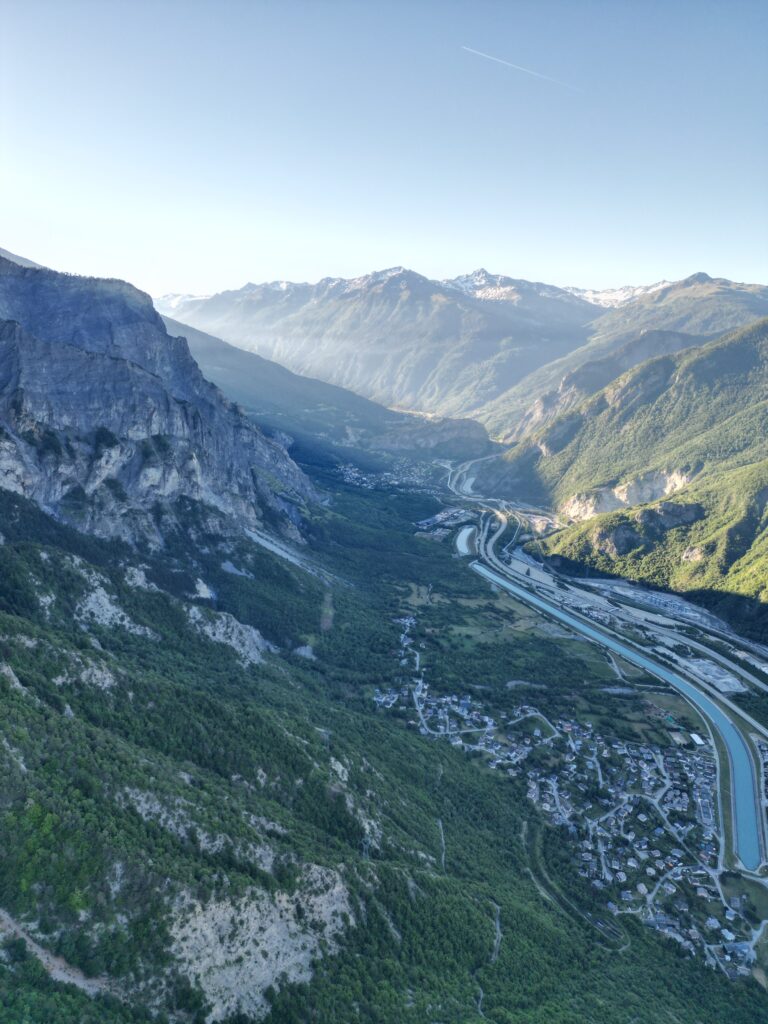
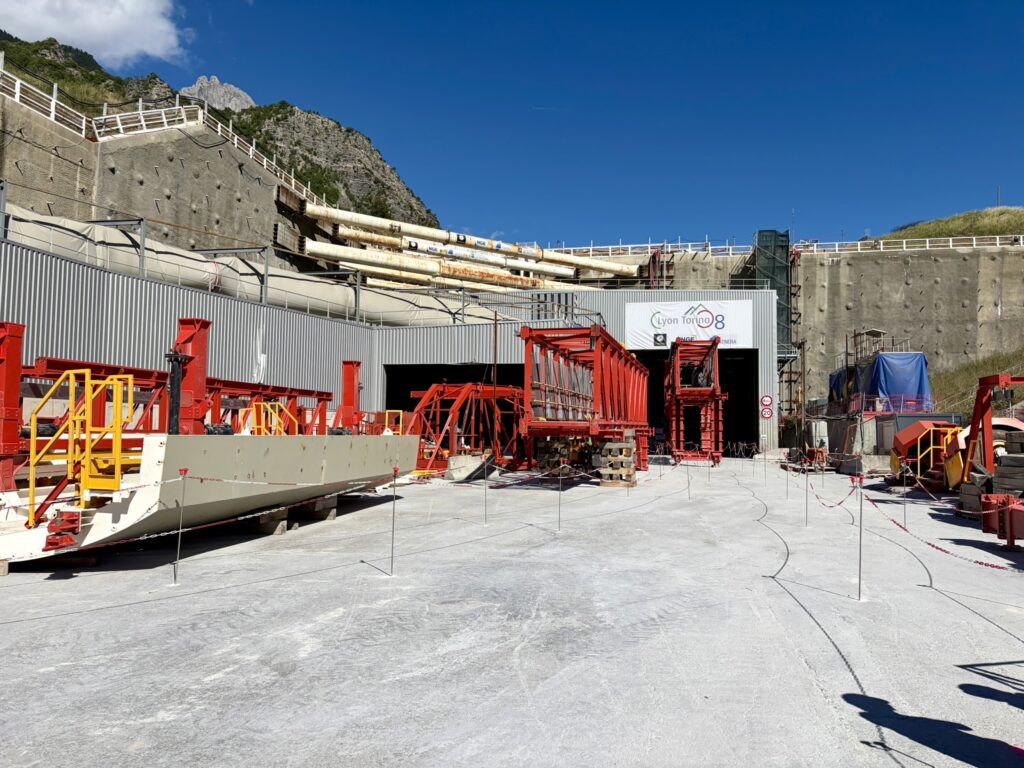
Tunnels entrance on the French side
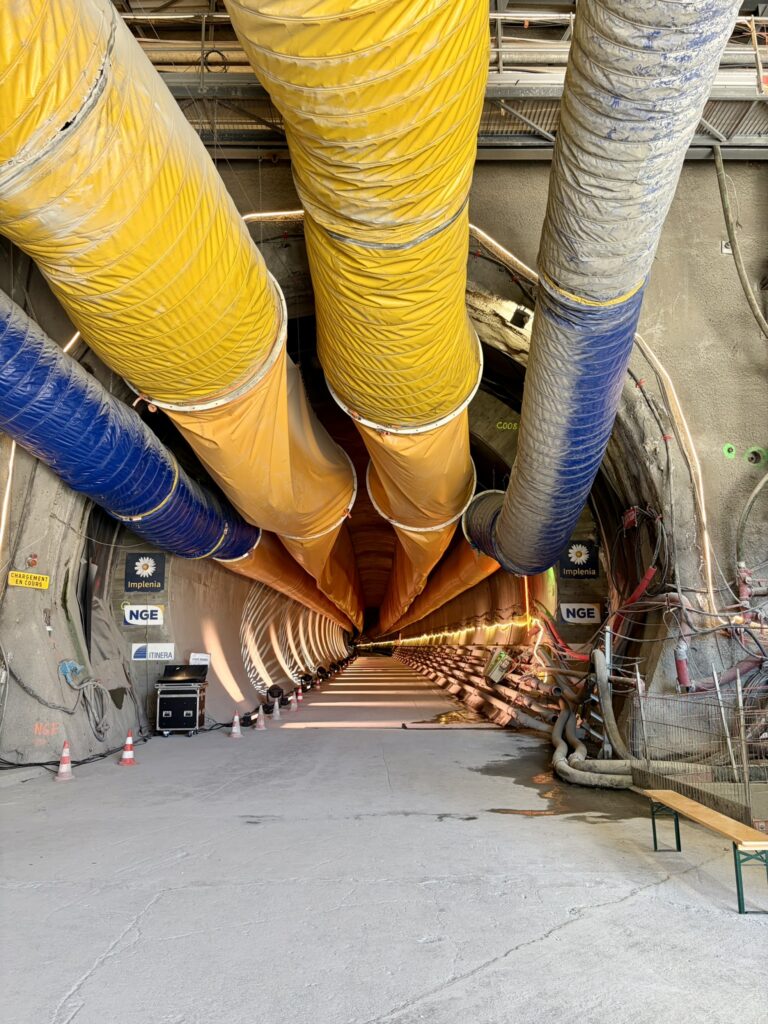
Beginning of one of the tunnels with construction site ventilation systems
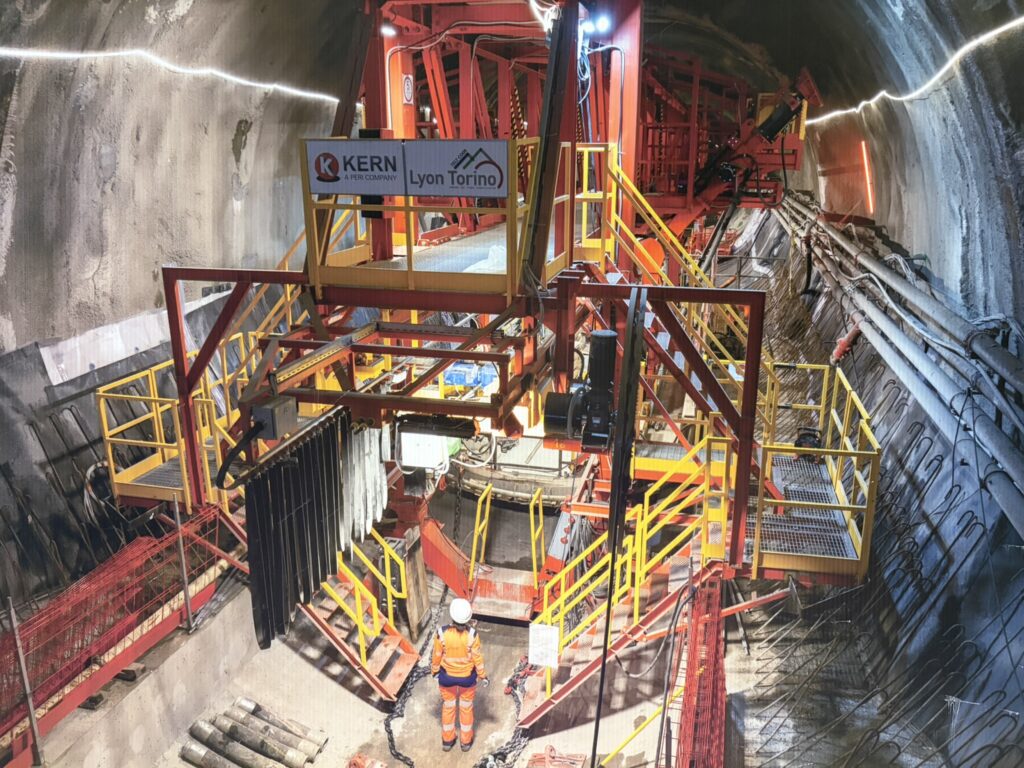
Counter-vault formwork system
6.2 The different lots & stakeholders
Table A3 Summary of the TELT Operational Worksites (COs), approximate figures [47]
| CO | Location | Scope | Schedule | Consortium | Workers | Budget |
|---|---|---|---|---|---|---|
| 01 | Bussoleno | Tunnel + Bridge | To be awarded | ? | ? | |
| 02 | Susa | 68.000 m² car and truck terminal | 2021-2026 | Sitaf | ? 250 | ? €100m |
| 03/04 | Chiomonte | 12,5 km of base tunnel with 2 TBMs | 2021-2029 | Itinera + Ghella + Spie Bat. | 700 | €1,000m |
| 05a | Villarodin | 4 ventilation shafts of 500 m depth | 2022 – 2030 | Vinci + WeBuild + Master Dril … | 300 | €220m |
| 05 | Villarodin | 22 km of base tunnel with 2 TBMs | 2025-2032 | Eiffage + Spie Bat. + Ghella + Cogéis | 1.200 | €1,470m |
| 06/07 | St Martin | 25 km of base tunnel with 3 TBMs | 2016-?2022 | Vinci + WeBuild + Setec + Systra | 1.550 | €1,430m |
| 08 | St Julien | 3 km of base tunnel | 2021-2026 | Implenia + NGE + Itinera + Rizzani | 300 | €228 |
| 09 | St Jean de Maurienne | Multimodal hub & railway station | 2023-2032 | Eiffage + TSO + others | ?250 | €190 + €25m + ? |
| 10 | Salbertand | Excavated spoil valorisation site | 2024-2027 | Cogeis, CO.GE.FA, TRA.MA, Cavit | ? | €648m |
| 11 | “Modane” | Management of 23M tons excavated | 2023-2033 | Vinci + Vicat + Spie Bat. Gie Gmm 73 | 300 | €800m |
| 12 | France / Italy | Railway systems, telecom and maintenance | 2026-2032 ; maintenance until 2047 | To be awarded in 2026 | ?€3,000m |
Table A4 Detailed stakeholders involved in the TELT project
| Stakeholder Category | Examples | Main Interests / Objectives | Role / Influence |
|---|---|---|---|
| Public Authorities & Governments | European Union, French Government, Italian Government | Transport policy, decarbonisation, territorial cohesion, international cooperation, public financing | Strategic decision-making and project funding |
| Project Owners & Infrastructure Managers | TELT, SNCF Réseau, Rete Ferroviaria Italiana (RFI) | Project delivery, railway integration, technical coordination, operational compatibility | Management and supervision of infrastructure development |
| European Funding Institutions | CEF, TEN-T, European Investment Bank | Support of low-carbon transport corridors and European connectivity | Co-financing and financial oversight |
| Construction & Engineering Companies | Eiffage, Vinci, Webuild,… | Construction contracts, technical execution, systems integration, maintenance | Execution of civil works and railway systems |
| Local Authorities & Regional Institutions | Regions, municipalities, local development agencies | Regional attractiveness, mobility improvement, local economic development | Territorial planning and local coordination |
| Local Communities & Residents | Residents of Maurienne Valley and Susa Valley | Quality of life, employment opportunities, environmental and noise concerns | Public acceptance and social impact |
| Environmental Organisations & NGOs | Environmental NGOs, No TAV movement | Environmental protection, biodiversity preservation, criticism of project | Public debate and environmental pressure |
| Freight Operators & Logistics Companies | Rail freight operators, logistics companies, intermodal actors | Increased freight capacity, improved cross-border logistics, reduced transit times | Future operational use of the infrastructure |
| Passengers & Railway Users | International travellers, regional passengers | Faster mobility, improved rail connectivity and modal shift | Future transport demand |
| Experts, Consultants & Academic Institutions | Geologists, engineers, economists, universities | Technical studies, risk analysis, environmental assessment, feasibility analysis | Scientific and technical expertise |
6.3 Three billion tenders for the next TELT phase – CO12/T15
6.3.1 Intro & Key figures
In June 2023, TELT published its first contract notice for “the design and execution of secondary civil engineering works, the installation of railway and non-railway systems, as well as the maintenance of the cross-border section of the Lyon–Turin rail link”. This contract was estimated to 2.93 billion upon its publication. [47] At present, the procurement procedure is still ongoing. The purpose of this section is not to anticipate the outcome of the procurement process but to illustrate the contractual structure and its relevance to this research.
Contract type = A global performance contract as defined in Article L2171‑3 of the French Public Procurement Code.
Duration = 21 years including 15 years on maintenance.
- 2026-2032 = design studies, construction works and system installation
- 31 December 2032 = commissioning date
- 2032-2039 = firm maintenance term
- 2040-2047 = optional maintenance extension [48]
6.3.2 Relevance to this thesis
First, it is important to correctly interpret the terminology used for this contract:
- CO12 refers to the Operational Worksite (a “functional lot” within TELT’s overall phasing).
- àT15 is the main contract associated with CO12 (the one covering railway equipment and systems).
The T15 fits perfectly with the subject of this thesis, as it is a major design–build–maintain project for a strategic infrastructure asset in Western Europe.
In addition, it is located in a mountainous environment, where natural hazards are more concentrated and vulnerability to climate change is higher.
It is also important to nuance this by noting that approximately 90% of the railway route is in tunnel, which is generally less exposed to natural hazards. Nevertheless, as with any chain, if the weakest link fails, the entire system loses its functionality.
6.3.3 Structure of the T15 contract
This contract is not a DBFM, as there is no private financing involved in the project. The funding is entirely provided by the European Union along with the French and Italian States. We are here speaking of a DBM.
Table 3 Simplified allocation of responsibilities – T15 contract
| Function | Tunnel Euralpin Lyon Turin (Client / Contracting Authority) | T15 Contractor |
|---|---|---|
| Preliminary design | ✔ | ✖ |
| Detail design | ! supervision / approval | ✔ |
| Construction | ✖ | ✔ |
| System integration | ✖ | ✔ |
| Long-term maintenance | ✖ |
The choice of this contractual structure is deliberate. The aim is to retain strategic control over key aspects such as interoperability and tunnel safety, while transferring both the technical execution risk and the operational performance risk to the contractor. This type of arrangement is commonly used for major railway tunnel projects, particularly in Alpine tunnels, heavy metro systems, and other large critical infrastructure works, where the complexity and long-term performance requirements justify such a distribution of responsibilities.
6.3.4 Noteworthy observation
After the commissioning date, there is also an optional work for the construction of the tunnel’s cooling system and its maintenance for 7 years. There is no confirmation that this optional section of the contract is directly related to climate change and to anticipated resilience measures. Maintenance fees will be structured as periodic payments, the amount of which will depend on the bonus/penalty mechanism linked to the performance of the contractor under this contract.
No confirmation has yet been received as to whether potential future unavailability of the line caused by natural hazards would be classified as a non‑performance event and therefore subject to financial penalties. Nevertheless, at this stage and pending further clarification from TELT, and given that the contract follows a DBM‑type structure with clearly defined performance obligations, it is reasonable to assume that such disruptions could fall within the scope of the contractor’s responsibility. Under this assumption, these events would generate additional costs during the infrastructure maintenance phase, directly attributable to climate change and the increasing need for enhanced resilience measures. Here, we refer to minor or limited events, not to force‑majeure‑type natural disasters, which are addressed separately in Section 6.4.10 on the financing of the project and the transfer of natural‑hazard risks.
6.4 Summary of interview with TELT
The first contacts were with Lionel Gros, Deputy Managing Director – France and then a long interview with Marzia Giacoia, Head of Sustainable Development.
6.4.1 Consideration of climate change in the design and construction
The project dates back to the early 2000’s. At that time, climate resilience was not considered a key requirement and was therefore not explicitly integrated into the initial design, even though preliminary studies were carried out in both France and Italy to obtain excavation permits. An environmental impact assessment was conducted at the start of the project. During subsequent updates, particularly when revising the European funding agreement, the project received confirmation that it meets climate‑resilience requirements. A new study was then carried out, building on the previous assessments and updating them based on the first construction works. This update was necessary for the second phase of the project’s financing.
6.4.2 Natural hazards that could impact the project
The identification of natural hazards that could affect the project was carried out as part of a dedicated study. A summary of this study, received later, is section 6.5
This assessment did not lead to any cost adjustments, as the project was (and still is) considered resilient to climate change. The study was conducted in 2023 and examined several factors: rising temperatures, changes in precipitation, wind patterns, and catastrophic events (to be specified). A summary table lists the identified risks along with a weighting for each of them. The Maurienne and Val di Susa stations, which are part of the cross‑border section managed by TELT, are also included in the analysis, with specific natural hazards identified A separate document provides a detailed focus on these two stations.
6.4.3 Impact of natural hazards on the location & length of the tunnels
There has been no change to the alignment as a result of natural hazards. On the Italian side, the route was modified, but for different reasons: the adjustments were made due to impacts on local territories and natural resources. These decisions were taken before TELT existed, during an earlier phase of the project.
6.4.4 Changing of frequency of natural hazards impacting the project
The natural hazards considered “structuring” for the project do indeed have frequencies that may evolve with climate change. However, this analysis was carried out after the design phase, when the alignment and technical choices had already been established. More recent studies, conducted after the initial design, confirmed that the tunnel remains resilient to climate change. Extreme scenarios had already been taken into account during the design process, which contributed to this robustness. There are known links between rising temperatures, changes in precipitation patterns, and global warming. Nevertheless, because of its very nature (a deep underground structure) the tunnel is only minimally affected, if at all, by climate‑related changes.
6.4.5 (Extra) cost for the project to adapt it resilient to climate change
An update of the project’s final cost was carried out, incorporating several scenarios and potential solutions to address the impacts of climate change. At this stage, there is no indication that the budgeted costs will need to be increased. The analyses confirm that the project remains compatible with the updated climate assumptions and that no major adaptation is expected to generate significant additional costs.
6.4.6 Increasing of natural hazards impacting the project in the future
The hazards classified as high‑risk were taken into account in the assessment. Among them, rising temperatures stand out as one of the most significant factors in future climate projections. However, it is difficult to provide a definitive statement, as these conclusions rely on forecasts that we do not fully control. They are predictive models developed in collaboration with the scientific community, and they naturally involve a degree of uncertainty.
6.4.7 Measures taken in the design to limit the impact of these risk
Regarding the design phase, it is difficult to provide detailed information because the CO12 contract is still under procurement, which makes the topic sensitive. However, it is possible that rising temperatures could influence certain design parameters and potentially affect the associated infrastructure costs. These aspects will be clarified once the contract is awarded and the detailed design studies begin.
6.4.8 Studies for construction/maintenance cost impact related to the climate change
This is also a sensitive topic. The overall impact of potential additional costs linked to climate change is not known at this stage, mainly because the CO12 contract (which covers all systems and part of the maintenance) is still under procurement. However, it is worth noting that even in the tender documents (DCE), the maintenance section already includes a substantial component dedicated to climate‑related risks. This shows that these issues are being considered, even though their precise financial implications have not yet been fully defined.
6.4.9 Stakeholder of the different CO and assurances distribution
More detailed information was expected from TELT’s Chief Financial and Administrative Officer. This would have clarify which entities, within the various operational work packages (COs), are responsible for subscribing to insurance policies, as well as the types of coverage required.
6.4.10 Financing of the project and risk transfer for the natural hazards
In general, responsibility for unforeseeable natural events lies with the project owner, TELT, which must identify solutions and finance the measures required to address exceptional circumstances under the contract. In practice, this means that the financial burden ultimately falls on the European Union, through the French and Italian States. The contractors are not responsible for such natural hazards. Except in cases of error, negligence, or damage caused by their own actions, in which case contractual penalties apply. Here, we are dealing with unforeseeable natural events, which do not fall under their liability. Since the beginning of construction, no climate‑related disaster has occurred. During the first phase of the project, geological reconnaissance studies were carried out. At that time, TELT was not yet the project owner. These studies led to several technical decisions: some sections were excavated using traditional or drill‑and‑blast methods, others using tunnel‑boring machines. In the first nine kilometres, the rock quality was poor, with significant carbon content, making TBM excavation impossible. The chosen solution was to inject cement to consolidate the ground and allow the TBM to advance. But this relates to geological surprises, not natural hazards. There were indeed some minor geological surprises, but they were not directly linked to natural risks.
6.4.11 Tender document of CO12 and standards of sustainability
TELT has an established procurement strategy that includes, among other elements, sustainability‑related standards. Regarding CO12, the tender documents (DCE) are not accessible (even some TELT employees do not have access) which reflects the sensitivity of this contract. TELT applies the ENVISION certification standards across the design, construction, and O&M phases. In Italy, this framework is widely used to assess the sustainability of infrastructure projects. For example, Ferrovie dello Stato (the Italian equivalent of SNCF) applied it during the design of the Rome–Naples high‑speed line. In 2023, TELT decided to formally adopt the ENVISION standard as part of its procurement strategy, reinforcing the integration of sustainability criteria throughout the project lifecycle.
6.4.12 Climate Scenarios and the Adaptation Matrix Development
In 2023, preliminary work was carried out, including the development of a climate‑change adaptation matrix. TELT is currently working on defining the climate scenario expected at the time the infrastructure enters into service. The next step will be to analyse adaptation scenarios for the line during the construction phase. TELT is also conducting an in‑depth study with a Lyon‑based consultancy, Aktio (part of the APAVE group), using more scientific and detailed climate models. The aim is to test the robustness of the adaptation matrix and ensure that the proposed measures remain relevant under different climate scenarios. This method aligns with the approach presented in Laura Costa’s article “Planning for Natural Hazards: Robust Approach for High-Speed Rail Infrastructure” [24] in which different scenarios incorporating the effects of natural hazards were tested. All these studies are internal and are not shared externally. However, some elements were later transmit under NDA and a part of this information are in section 6.5.
6.4.13 Carbon Footprint
The interview also addressed the project’s carbon footprint, a topic not initially included in the interview guide but relevant to the project’s strategic positioning. While the construction phase undeniably generates a significant amount of CO₂ emissions, the fundamental rationale of the project is to decarbonise the Alpine region through a large‑scale modal shift from road to rail. Moreover, even the construction‑related emissions are mitigated through several measures, including the dedicated contract for the treatment of excavated materials (MATEX), which enables their reuse in embankments, pavement layers or concrete production, thereby reducing the overall carbon impact of the works. TELT’s strategy is to communicate transparently about the project’s carbon footprint.
6.5 Climate Resilience : Adaptation to Climate Change
6.5.1 Climate scenario simulation
This section summarizes part of the, confidential, study caring out by PTS & Systra in 2023. They asses the climate context of the project throughout the life cycle of the project with data from the IPCC (Intergovernmental Panel on Climate Change), DRIAS (France’s national climate projection portal) and COPERNICUS (Europe’s global climate data platform. They use two different climate scenarios of RCP (Representative Concentration Pathways) and performed seven indicators (number of extreme heat days per year, maximum daily precipitation, maximum temperature, …). The simulation perimeter covered both the international railway section but also the French railway access from Lyon and the Italian one from Turin. The detailed results of this study are not presented here, as the underlying analysis is confidential. Only high‑level insights relevant to the research objectives are summarised, in full compliance with the confidentiality obligations agreed with TELT. As expected, there is significative, and worrying, increase of the number of extreme heat days per year and of the maximum temperatures. The windspeed, low temperatures and precipitation (except local flood) does not appear to be decisive for the design, construction, cost and maintenance.
6.5.2 Climate risk identification
Risks were categorised by theme and appraised with three parameters : frequency, project’s exposure and hierarchy of the risk. Probably to compare with hazard + vulnerability = risk level.
Table A5 Climate Risk Identification on the TELT project (approximate information’s, unofficial and unverified)
| Theme | Impact | Probability | Incidence | Level |
|---|---|---|---|---|
| Heat Waves | Air quality and discomfort in the tunnels | ++ | + | + |
| Station thermal discomfort | +++ | ++ | ++ | |
| Rail deformation | ++ | +++ | +++ | |
| Other materials damages | ++ | ++ | ++ | |
| Drought | Water consumption VS water availability | |||
| Weakening of watercourse or increase in temperate | + | + | ||
| Water pollution | + | + | + | |
| Vulnerability of landscape | + | ++ | ++ | |
| Wildfires, forest fires | Forest and landscape fire | ++ | ++ | ++ |
| Material and equipment fire | ++ | + | + | |
| Fire frequency increase | + | ++ | ++ | |
| Floods and extreme rainfalls | Ground water elevation | +++ | +++ | +++ |
| Watercourse path change | ++ | ++ | ++ | |
| Watershed retention capacity modification | ++ | ++ | ++ | |
| Landslides | Rockslidkes | +++ | +++ | +++ |
| Mudslides | ++ | ++ | ++ | |
| Cold Waves | Snow loads on structures | + | + | |
| Material damages due to low temperatures | + | + | ||
| Operation interruption | + | ++ | ++ | |
| Energy access cutting off |
6.5.3 Climate Proofing
In this section, they explained how the Lyon–Turin project integrates climate‑change considerations into its technical design, construction methods, and long‑term operation. The Project Cycle Management (PCM) approach ensures that climate risks are systematically identified, mitigated, and monitored throughout the project lifecycle. Measures address both adaptation (resilience to climate hazards) and mitigation (reducing emissions), following EU “Climate Proofing” guidance (2021–2027). [46]
Heat Waves: Rising temperatures affect tunnel environments, stations, and rail infrastructure. Key measures include enhanced ventilation in tunnels, pollutant monitoring, cooling systems to maintain acceptable working temperatures, and improved insulation in buildings. Rail components are designed for high‑temperature resistance, with reinforced fastenings and real‑time rail‑temperature monitoring to prevent deformation.
Drought: Drought affects water availability, watercourse temperatures, and ecological balance. The project minimizes groundwater drainage and promotes water‑recovery solutions (e.g., geothermal reuse, domestic hot water). Temperature increases in intercepted water near portals are monitored, and water‑treatment systems ensure compliance with EU water regulations. Landscape design integrates species adapted to hotter, drier conditions.
Wildfires: Higher temperatures and drier conditions increase wildfire risk in Alpine regions. Preventive measures include vegetation management, improved access for emergency services, and strict adherence to prefectural fire‑risk regulations. Fire‑safety systems in tunnels and stations (ventilation, detection, firefighting equipment) reduce the likelihood and consequences of equipment or infrastructure fires.
Floods & Extreme Rainfall: Flooding risks stem from river overflow, intense rainfall, and groundwater rise. Hydraulic modelling identifies vulnerable areas, leading to dike reinforcement and protective embankments. Construction‑phase measures include evacuation plans, refuge areas, and sediment‑control systems. Tunnels are designed to limit groundwater drainage, with contingency plans if water abstractions are affected.
Landslides: Steep Alpine terrain and changing precipitation patterns increase landslide and rockfall risks Stabilization measures include rockfall nets, slope reinforcement, drainage systems, and continuous geological monitoring. Tunnel excavation accounts for variable permeability and potential inflows, especially in flysch, gypsum, and anhydrite formations.
Cold Waves: Cold extremes affect snow loads, energy supply, and infrastructure durability. Structural design follows Eurocodes for snow‑load resistance. Redundant communication and power systems ensure operational continuity during extreme cold events. Freeze–thaw risks are acknowledged, though data remains insufficient for a full assessment.
Conclusion: They demonstrates that the Lyon–Turin project integrates a comprehensive climate‑risk management strategy aligned with EU Climate Proofing requirements. Through PCM, the project ensures that each climate hazard is addressed with targeted technical, organizational, and environmental measures, strengthening long‑term resilience and operational reliability.
6.6 Conclusion about TELT projects
The analysis of the Lyon–Turin project shows that TELT has integrated natural‑hazard considerations in a substantial and structured manner across its governance, design processes and operational procedures. Although nearly 90% of the cross‑border section is located in tunnel — which reduces exposure to certain surface hazards such as rockfalls, avalanches or windstorms — the project remains significantly exposed to climate‑sensitive geological, hydrological and geotechnical risks. These include increased groundwater inflows, pressure variations, slope instabilities near portals, extreme‑precipitation events affecting access areas, and long‑term changes in rock mass behaviour linked to temperature shifts or permafrost degradation.
TELT’s monitoring systems, risk assessments, technical redundancies and contractual requirements demonstrate a high level of maturity. However, emerging climate‑related hazards remain difficult to quantify and may generate additional maintenance and insurance costs over the asset’s lifecycle. The DBM structure of lot T15 relies on a predefined allocation of risks that could come under pressure if the frequency or severity of climate‑driven events exceeds initial assumptions. Insurers, facing growing volatility, may also tighten their requirements regarding preventive maintenance, continuous monitoring and resilience measures, directly influencing the project’s long‑term financial exposure.
Overall, even as a predominantly underground project, TELT remains exposed to climatic uncertainty that will require continuous adaptation of technical, financial and insurance practices. The project illustrates both the progress made in integrating natural hazards into major infrastructure delivery and the need for ongoing vigilance as climate dynamics evolve.